
HTTP API DV360 destination | Community
Skip to main content
GigiCotruta
Level 4
April 11, 2025
Solved

HTTP API DV360 destination

  • April 11, 2025
  • 1 reply
  • 671 views

Hello, there, 

I would like to send some audiences to DV360 via HTTP API. I can´t do it using the native connection as I want to send hashed emails and this destination does not have it as an option:

Google Display & Video 360 connection | Adobe Experience Platform
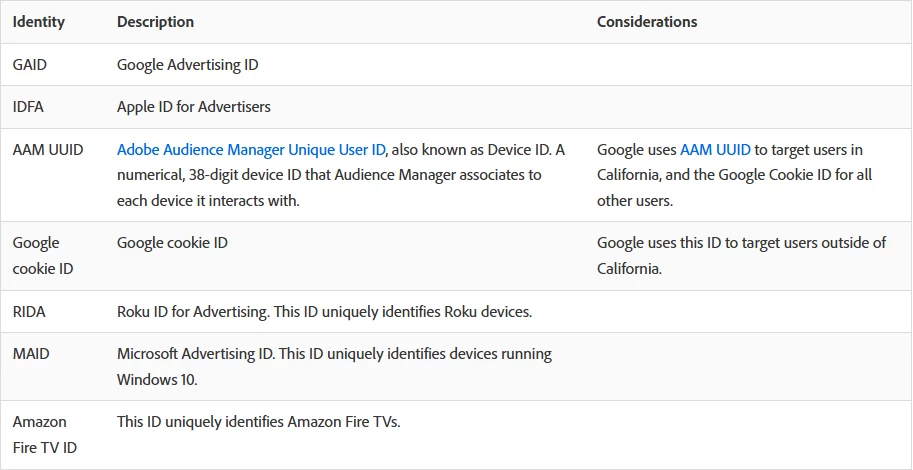
I have some questions regarding this implementation:

  1. What endpoint should I use to do it?
  2. I can see that tin the HTTP API I can only chose atributes for the export, but I can't map them, so, is there a way to change the structure of the export? I took this info from the HTTP API docu: HTTP API connection | Adobe Experience Platform
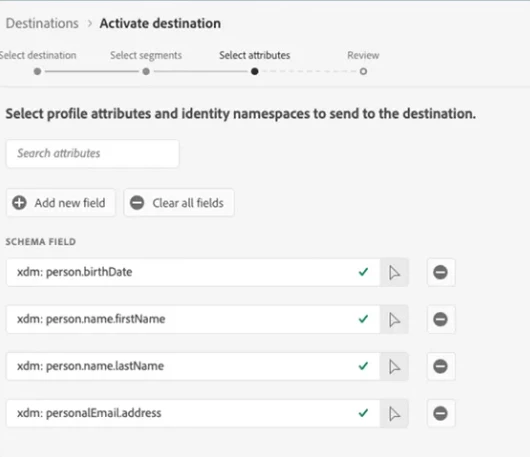
    The output will look like this: 
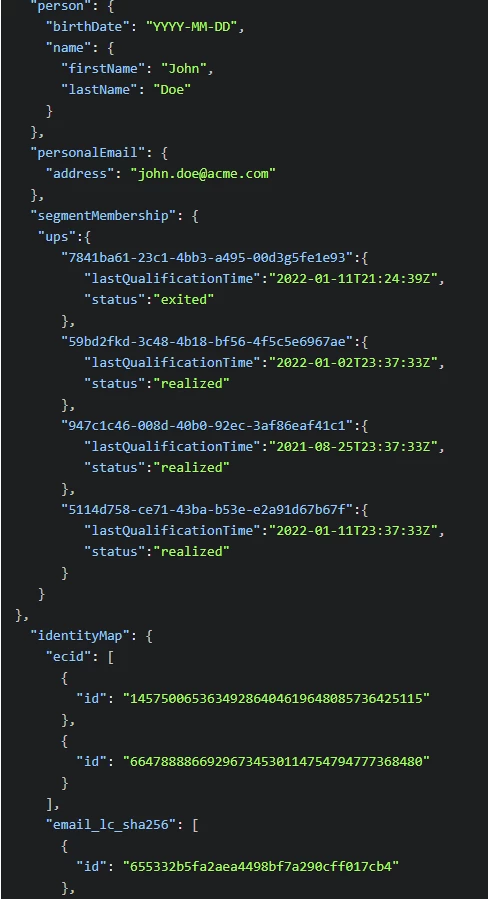
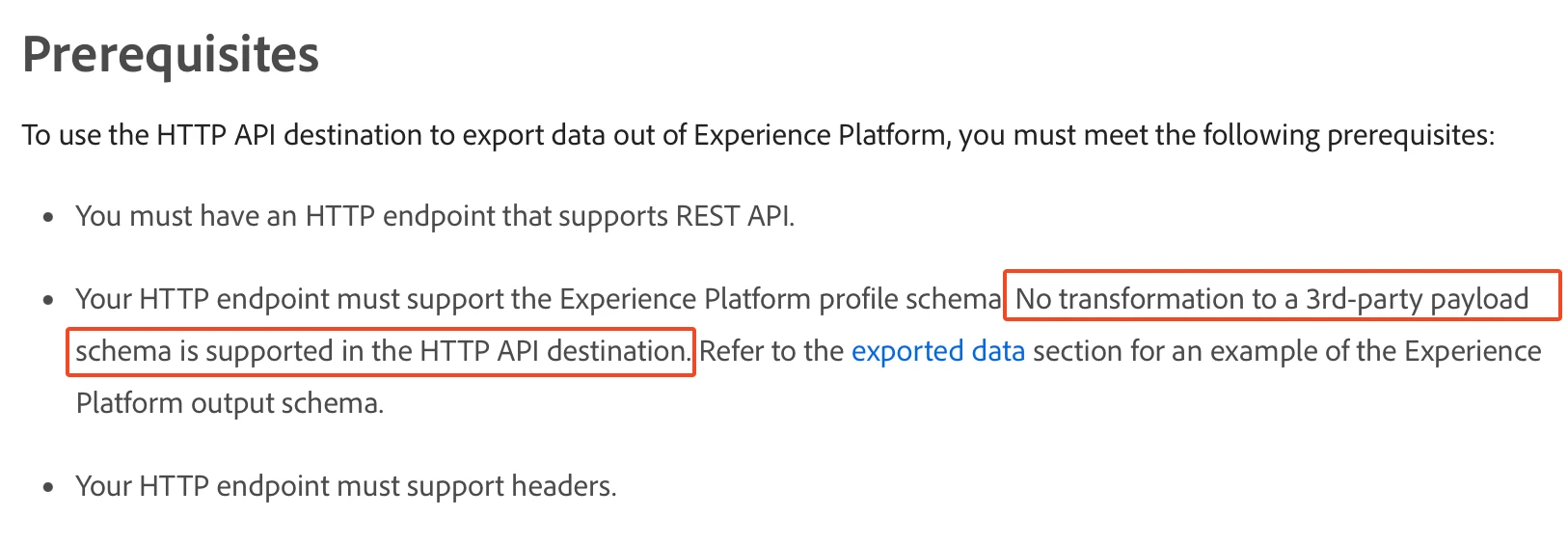
    The question is if DV360 has a specific format for this type of export, would I be able to edit the format of the payload I am sending via this connection?
Best answer by Parvesh_Parmar

Hello @gigicotruta ,


I looked into the documentation, and here’s a quick summary based on your questions:

1. Which endpoint to use:

This setup is designed for custom-built HTTP endpoints — for example, APIs hosted on Azure Functions, Google Cloud Functions, or AWS Lambda. These endpoints are typically accessible via HTTPS (either public or private) and secured via authentication mechanisms that you can configure. Adobe Experience Platform (AEP) will send data directly to this endpoint when activating audiences.

2. Data format:

The output format from AEP is a fixed JSON structure, as specified in the documentation. This format cannot be customized, so your endpoint must be able to handle and parse that exact structure.


3. Using third-party APIs:

If you’re planning to send the data from AEP directly to a third-party API (like DV360), there’s a high chance the formats won’t align. Most third-party APIs expect their own specific structure, which AEP doesn’t natively support out of the box.

4. Recommended approach:

The best practice is to build your own intermediate HTTP endpoint (e.g., using Azure/GCP/AWS). AEP will push data to this endpoint in its native format. From there, your function can parse and transform the data as needed, and then forward it to the final destination (e.g., DV360) in the required format. This gives you full control over the integration and transformation logic.


Hope this helps clarify things!


Best regards,

Parvesh

1 reply

Parvesh_Parmar
Community Advisor
Parvesh_ParmarCommunity AdvisorAccepted solution
Community Advisor
April 15, 2025

Hello @gigicotruta ,


I looked into the documentation, and here’s a quick summary based on your questions:

1. Which endpoint to use:

This setup is designed for custom-built HTTP endpoints — for example, APIs hosted on Azure Functions, Google Cloud Functions, or AWS Lambda. These endpoints are typically accessible via HTTPS (either public or private) and secured via authentication mechanisms that you can configure. Adobe Experience Platform (AEP) will send data directly to this endpoint when activating audiences.

2. Data format:

The output format from AEP is a fixed JSON structure, as specified in the documentation. This format cannot be customized, so your endpoint must be able to handle and parse that exact structure.


3. Using third-party APIs:

If you’re planning to send the data from AEP directly to a third-party API (like DV360), there’s a high chance the formats won’t align. Most third-party APIs expect their own specific structure, which AEP doesn’t natively support out of the box.

4. Recommended approach:

The best practice is to build your own intermediate HTTP endpoint (e.g., using Azure/GCP/AWS). AEP will push data to this endpoint in its native format. From there, your function can parse and transform the data as needed, and then forward it to the final destination (e.g., DV360) in the required format. This gives you full control over the integration and transformation logic.


Hope this helps clarify things!


Best regards,

Parvesh

Parvesh Parmar – Adobe Community Advisor https://www.linkedin.com/in/parvesh-parmar/
GigiCotruta
Level 4
April 16, 2025

Thank you, @parvesh_parmar,


After some investigation I got to the same conclusion. I will have to use an intermediate HTTP endpoint.