AEP - Adobe Consent Standard 2.0 and OneTrust CookiePro - How to map the consent categories properly | Community
Skip to main content
Level 2
June 7, 2023
Solved

AEP - Adobe Consent Standard 2.0 and OneTrust CookiePro - How to map the consent categories properly

  • June 7, 2023
  • 2 replies
  • 2034 views

Hi all


I know this may sound silly, but I am having a hard time understanding how Adobe envisions mapping kinda industry standard consent categories as found in OneTrust to their Adobe 2.0 Consent Standard Object.


Assume these categories exist in the consent banner (screenshot taken directly from Onetrust, also not including a marketing category either)
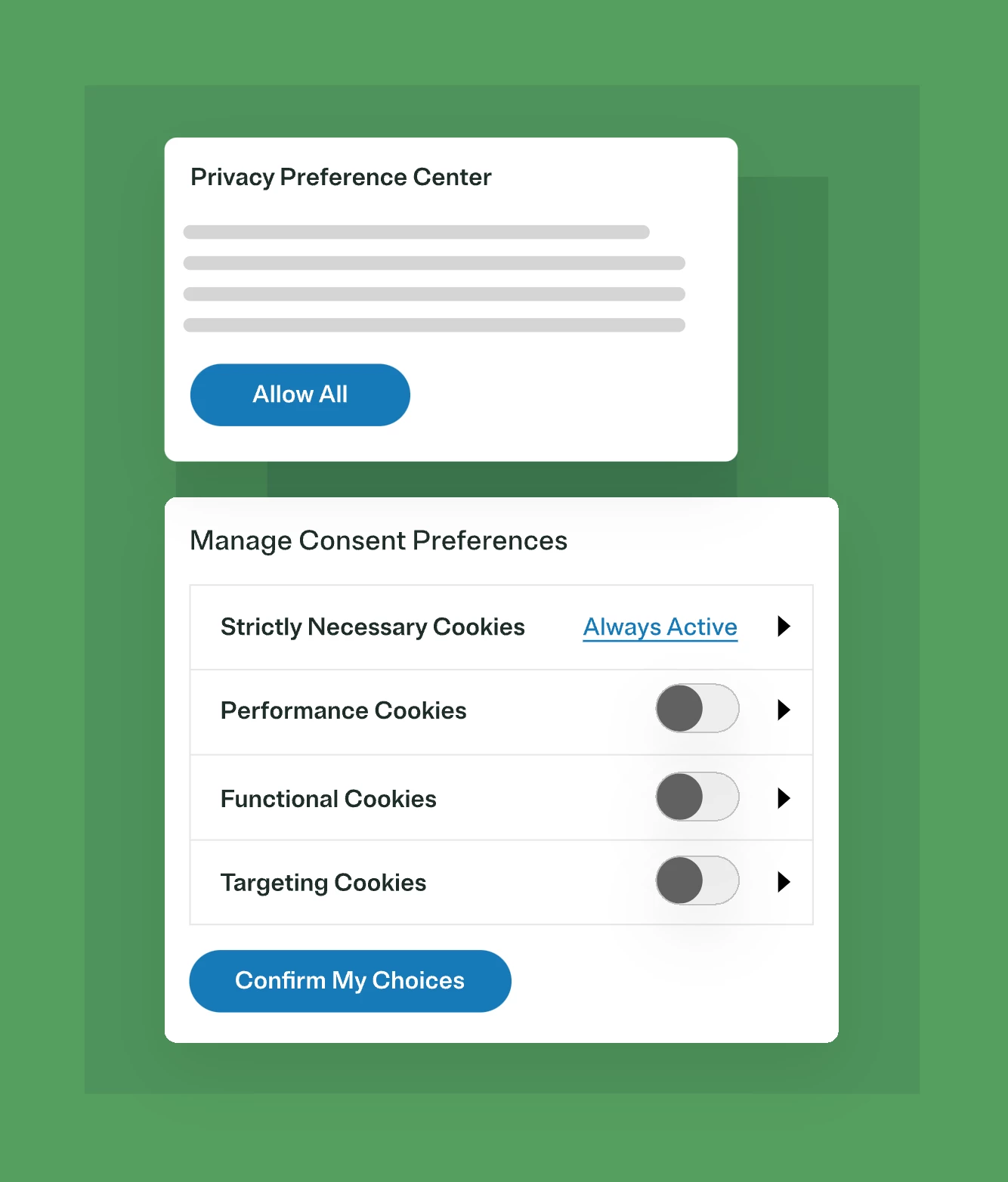
 

How do these translate to Adobe's AEP consent categories while at the same time making sure Adobe's AEP-attached products like Analytics, Audience Manager and Target respect these?

  • collect (this seems to be the global on/off switch, might require a new, custom consent category?)
  • marketing
  • share 
  • personalize

I mean, via a tag manager you could easily say "no analytics/performance consent = no Adobe Analytics firing" but how is this now being handled on the Experience Platform? Is it all just the same now?


I know, a lot of things are handled differently in AEP, but it really is a mystery to me how this is not better documented.

Does anyone have a good understanding and example how they handle it?


Best regards,

B.

This post is no longer active and is closed to new replies. Need help? Start a new post to ask your question.
Best answer by adobechat

Hi

Here's how you could handle it:

  1. Collect: This could be mapped to the collect of Adobe's Consent Standard Object. This is a general consent for data collection and usage, so it fits under this umbrella.

  2. Marketing: Adobe doesn't have a direct equivalent, but this might fit under the 'personalize' category, as marketing activities often involve personalization.

  3. Share: This could be mapped to Adobe's 'share' consent category.

  4. Personalize: This should map directly to Adobe's 'personalize' consent category.

Also, You could use the getConsent function of the Experience Cloud Identity Service to check whether consent was given for a particular category before sending hits. In AA and AT I mean.


Thanks

Madhan

2 replies

Level 4
June 8, 2023

I hear you!


There are multiple issues here.

Typically tools like onetrust talk about "cookies". Websdk should be the only library needed, managing data distribution to other Adobe tools on the server side. But websdk only needs 1 type of cookie, granular consent, e.g "don't do personalisation" is not coming out of the box. You need to implement it yourself.
Another issue: WebSDK "set consent" sets id specific values in Adobe Consent Standard 2.0, which are hard to use in segments


I think most of the issues can be solved, but you need to plan that as custom effort in your project. Adobe documentation indeed is currently not covering this "end-to-end".


b_kothAuthor
Level 2
June 9, 2023

Yeah fully agree! I think the general perception web users have today is: "if I say don't track analytics, do not track me - at all" whereas you are just agreeing or disagreeing that the website is allowed to set a cookie to achieve this. Google has its consent mode which essentially does that as well.


The general issue I see here is that pre-AEP, you could fine tune which applications were firing and now everything is squished together and now it no longer allows you to differentiate between different categories. Fair enough, I guess there is no one who actually says, target is super, but analytics I do not want.


Bottom line I think is: we must have a dedicated CDP consent category (acting as global on/off toggle) in the consent banner.

The other categories seem to be more up to yourself to be used with segmentation and data exports.


Agree?


adobechat
adobechatAccepted solution
Level 5
June 8, 2023

Hi

Here's how you could handle it:

  1. Collect: This could be mapped to the collect of Adobe's Consent Standard Object. This is a general consent for data collection and usage, so it fits under this umbrella.

  2. Marketing: Adobe doesn't have a direct equivalent, but this might fit under the 'personalize' category, as marketing activities often involve personalization.

  3. Share: This could be mapped to Adobe's 'share' consent category.

  4. Personalize: This should map directly to Adobe's 'personalize' consent category.

Also, You could use the getConsent function of the Experience Cloud Identity Service to check whether consent was given for a particular category before sending hits. In AA and AT I mean.


Thanks

Madhan

satyanarayanam1
Level 2
September 27, 2023

Do we have anyway to handle this on Mobile SDK. I didn't see any documentation supporting the consent preferences into CDP with Mobile SDK, the set consent only shows as in or out alone.