Hi @mezzome ,
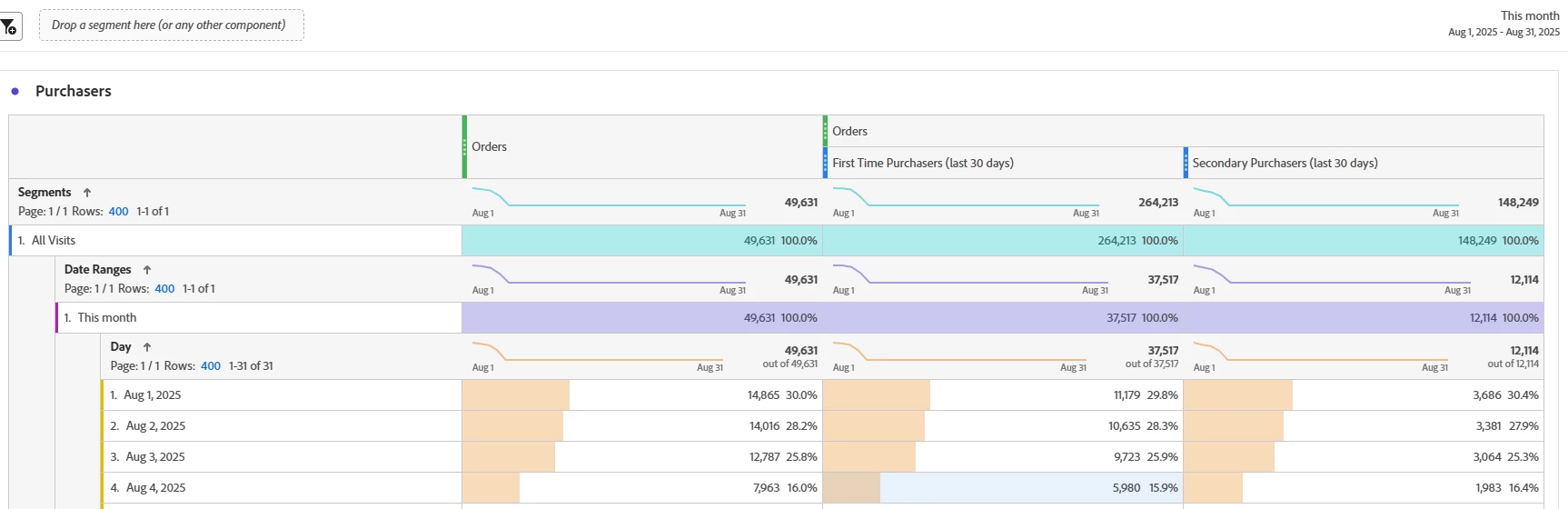
I don’t work for an eCommerce company, so I don’t have access to typical metrics like orders, etc. However, I was able to simulate your use case with a similar scenario:
Since I have access to raw data feeds, it was easy for me to experiment and validate the results directly from the source.
My Use Case:
Visitors who were active in the last 7 days but not in the previous 3 months.
As of today (8th August), this means I’m looking for users who visited the site between 1st–7th August, but not between 1st May–31st July.
Approach & Experiments:
Experiment 1:
I created a segment to identify users who were active in both the last 7 days and the previous 3 months.
This allowed me to subtract that group from the total visitors during the last 7 days to isolate the desired audience.
Findings: This method worked as expected when validated against the raw data.
(For your case: it would give you the visitors who order in both the date ranges, and you can subtract these users from the total user who purchased in the later date range)
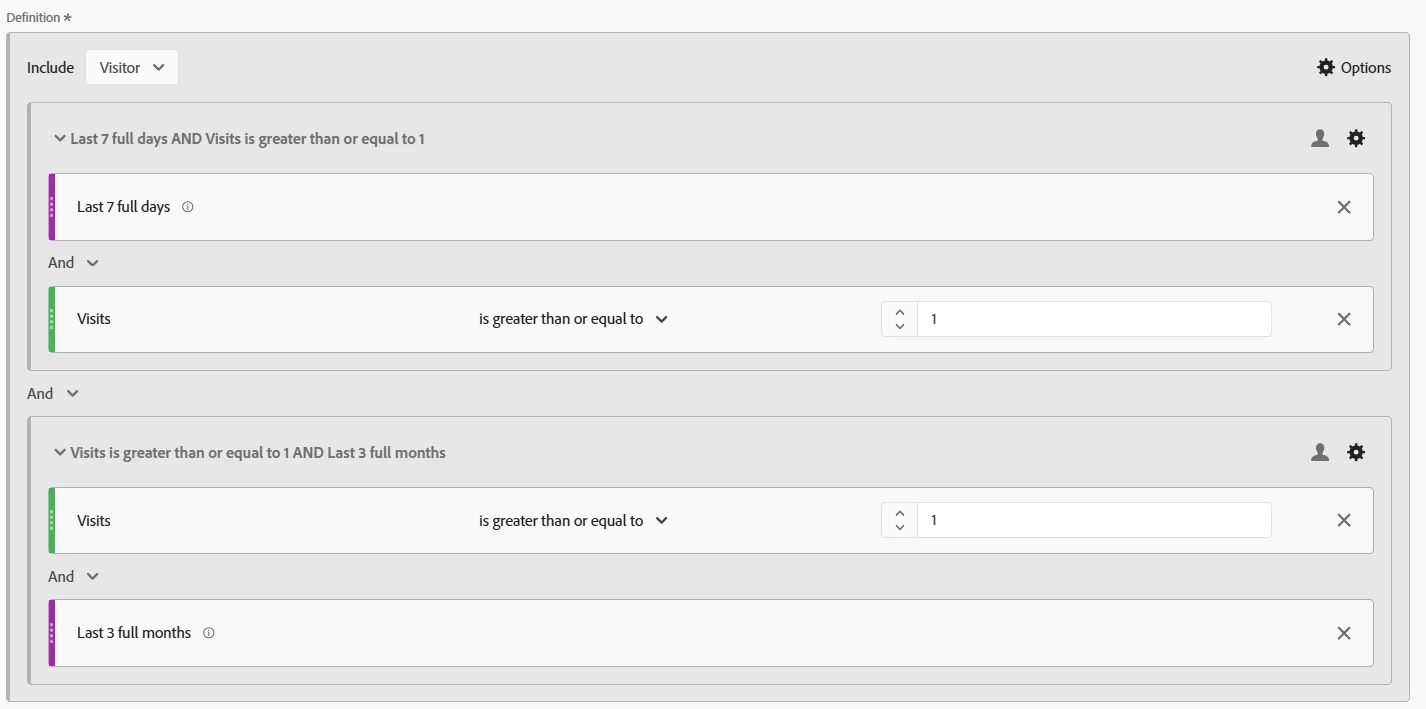
Experiment 2:
I created a segment for users who were active in the last 7 days, and explicitly "EXCLUDED" those who were active in the last 3 months.
Important Note: This method only works accurately when the date range selected on the analysis panel includes both timeframes (i.e., the last 7 days and the prior 3 months).
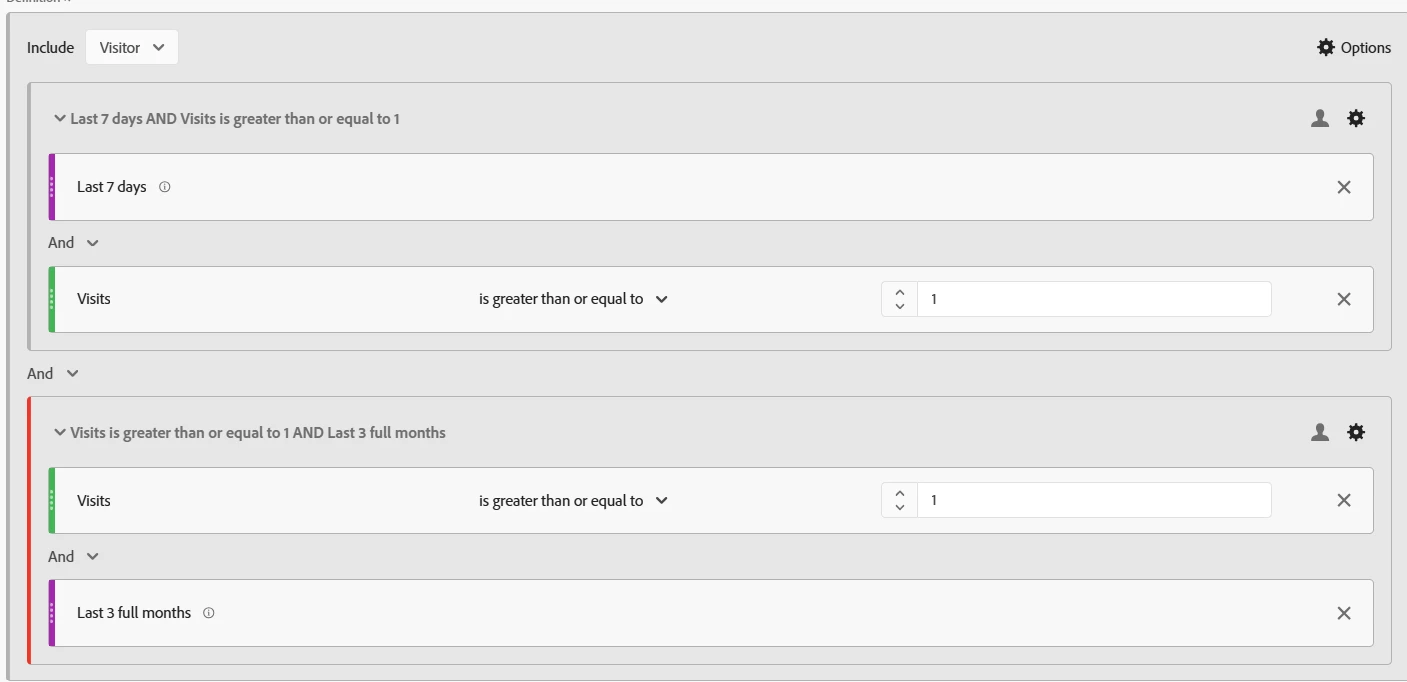
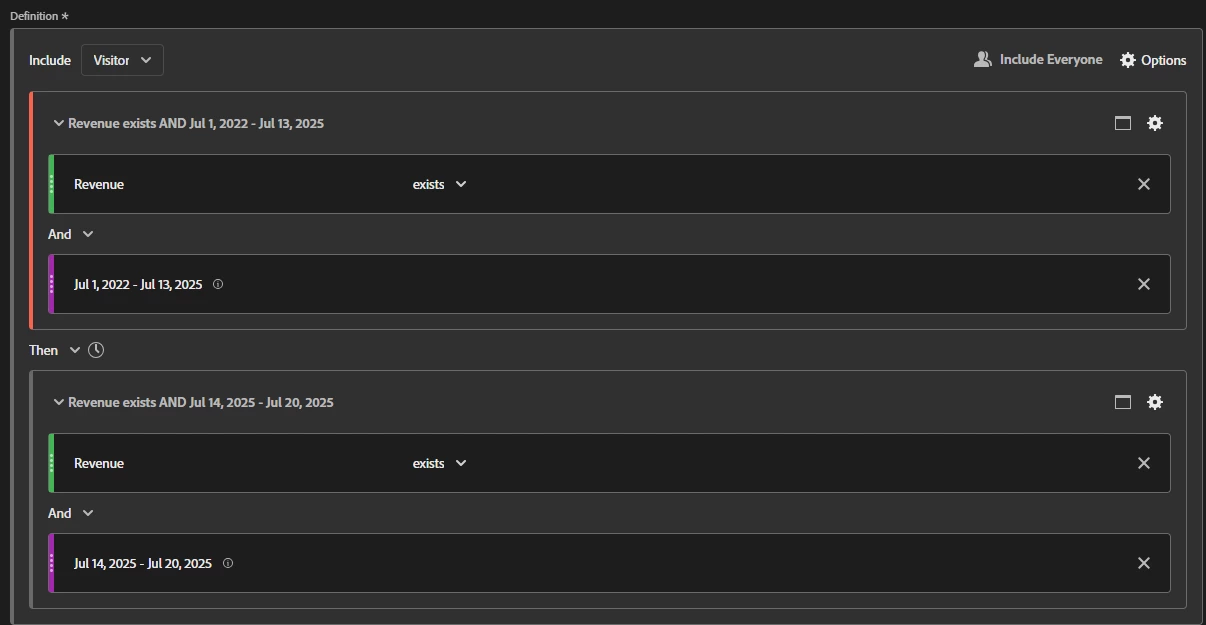
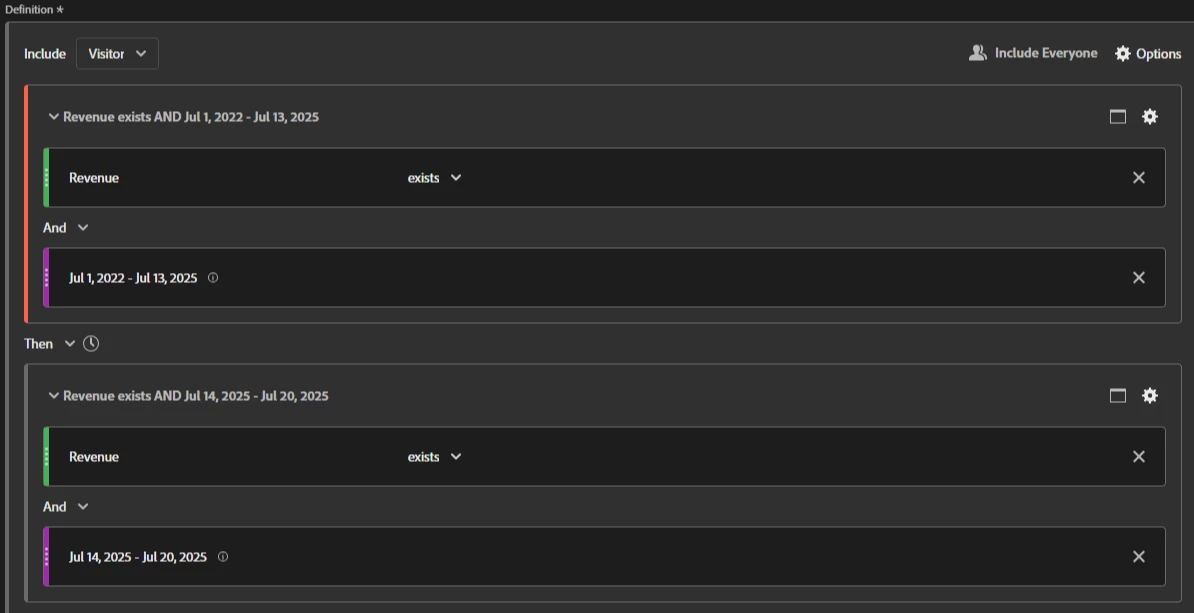
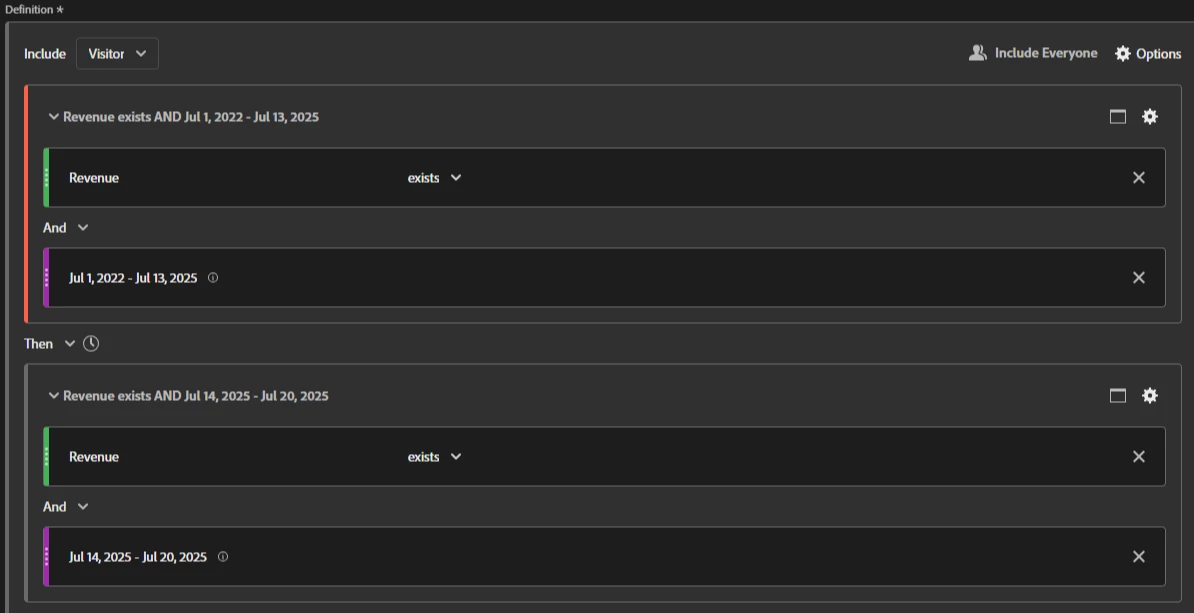
Regarding Your Segment (Based on the Screenshot You Shared):
From what I can see, using the "THEN" (sequential segment) logic might not be suitable for this use case.
That’s because you’re trying to filter users based on two separate date ranges, rather than defining a sequence of actions over time. Sequential logic is typically useful when you’re tracking event order, like users who did X and then Y.
Special Note:
Be cautious when using rolling date ranges within segments—these are calculated relative to the current date, which can affect your segment logic depending on when you run the report. so for this case, you can use the static date ranges in your segments.
I recommend trying an approach similar to what I’ve outlined above and seeing if that gives you the expected results.
Feel free to share how it goes or if you run into any issues.
Thanks,
Nitesh