Launches are lesser than unique visitor and visits | Community
Skip to main content
Level 2
June 27, 2023
Solved

Launches are lesser than unique visitor and visits

  • June 27, 2023
  • 1 reply
  • 3114 views

Hi,


from last 12 month launches are lesser than unique visitor . in which scenario this is happens .

even background data is not too much.


As per observation it not working properly for Android but ios its working good.
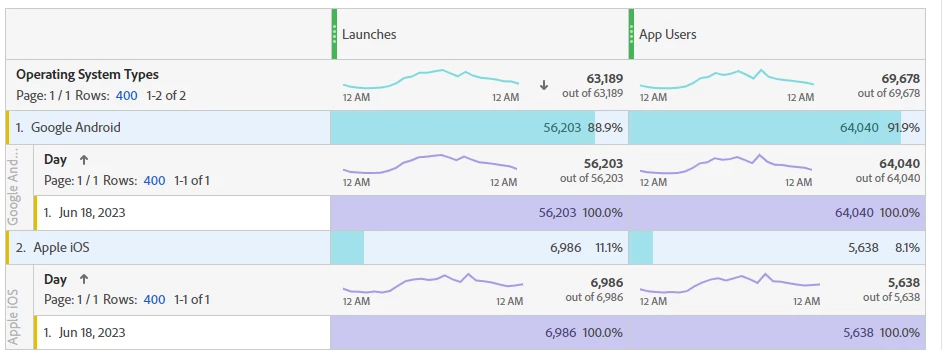


Please provide me better solution.


This post is no longer active and is closed to new replies. Need help? Start a new post to ask your question.
Best answer by FrederikWerner

There can be many reasons behind this, for example:

  • Depending on the nature of your apps, Android users might indeed have very long sessions, causing lower Launches than Unique Visitors. A good example would be Android TV devices for VOD platforms with very long viewing sessions.
  • The Launches metric relies on proper Lifecycle tracking through the SDK. If not all of your app activities are set up correctly, you might miss out on some entry points. You can have your developers check with the documentation at https://developer.adobe.com/client-sdks/documentation/mobile-core/lifecycle/android/
  • If the mismatched started with a certain app release on Android, it might be worth investigating what changed. Keep an eye out for any sort of deep linking that might have been added, as the mentioned Lifecycle tracking might have been forgotten.
  • Just to mention it: Check any Segments that might be applied to your Analysis Workspace Project, either through a Panel filter or a Virtual Report Suite, as those might exclude some Android data.

1 reply

FrederikWerner
Community Advisor and Adobe Champion
FrederikWernerCommunity Advisor and Adobe ChampionAccepted solution
Community Advisor and Adobe Champion
June 27, 2023

There can be many reasons behind this, for example:

  • Depending on the nature of your apps, Android users might indeed have very long sessions, causing lower Launches than Unique Visitors. A good example would be Android TV devices for VOD platforms with very long viewing sessions.
  • The Launches metric relies on proper Lifecycle tracking through the SDK. If not all of your app activities are set up correctly, you might miss out on some entry points. You can have your developers check with the documentation at https://developer.adobe.com/client-sdks/documentation/mobile-core/lifecycle/android/
  • If the mismatched started with a certain app release on Android, it might be worth investigating what changed. Keep an eye out for any sort of deep linking that might have been added, as the mentioned Lifecycle tracking might have been forgotten.
  • Just to mention it: Check any Segments that might be applied to your Analysis Workspace Project, either through a Panel filter or a Virtual Report Suite, as those might exclude some Android data.
Learn more about Adobe Analytics and Customer Journey Analytics on my blogNeed help with Adobe Analytics or Customer Journey Analytics? Let's talk!
rush_1997Author
Level 2
June 27, 2023

Hi Fedrik,


As per your given points .

We already implemented lifecycle events in Android and ios . 

Android and ios have same implementation.

I have no added extra filter in workspace


Jennifer_Dungan
Community Advisor and Adobe Champion
June 27, 2023

Is it possible that you have older versions of Android app that don't have Lifecycle metrics included?


In my experience iOS users adopt new versions of apps sooner, where Android users have a tendency to not update unless they are forced to update...


How in-depth have you tested your app? Do you have AEP Assurance installed? Are you using proxy testing like Fiddler or Charles? (Odd are, the security measures in Android are probably blocking Android testing, our only way to properly test is using AEP Assurance)... but during your testing, you need to make sure that your Lifecycle metrics are properly firing.


You should also try breaking down your data above to check what versions are showing, and see if there are any major version numbers missing Lifecycles.


Even when Android and iOS have the same implementation, there can be errors that only present in one OS. 


We have React Native apps that control both iOS and Android, but have experienced issues relating to Lifecycle in just Android in the past, or issues with both, with completely different behaviours.... this is because there are often "extensions" to control the Android or iOS code variations and those can cause some issues to present in only one os.