Yes, that is how instances of eVars works....
I am going to assume your eVar is set to a Visit level attribution... so let's look at an example:
- Page 1, eVar1 is set with a value of "value 1"
- Page View metric is counted, so is Occurrence, and Instance of eVar1
- Page 2, eVar is not set, but the value is still "value 1" due to visit level attribution
- Page View and Occurrence metrics are counted (but not the Instance of...)
- Click Action (from Page 2), eVar is not set, but again, visit level attribution comes into play
- Occurrence metric is tracked (not page view, since this is an action, and not Instance of...)
- Page 3, eVar1 is once again set with a value of "value 1"
- Page View, Occurrence and Instance of eVar1 are all set
Instance of eVarX is not meant to be a counter of unique values, it is a counter of when the eVar is actually set... as opposed to the eVar persisting its value due to its expiry setting.
You may be setting the eVar to a single value, and not changing it... but it sounds like your eVar is likely being set on every page with the same value.
If you see your eVar in the tracking call, that means it's being set, and it will have an Instance associated with it.
For example, something like a campaign tracking... when a url contains ?cid=123 (I track "123" into an eVar)... on that first page, I will see eVarX = "123" in my actual tracking call... but on the following pages, I won't see that value being "sent", but the value is still there, being applied to each hit in the Adobe processing rules.
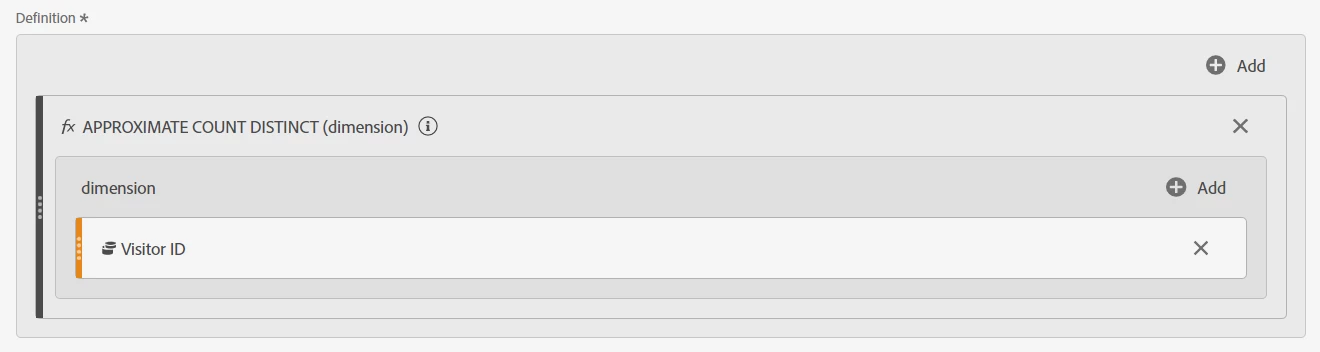
If I was tracking something like a user id in my eVar, I will likely be setting it on every page, because I don't know what page the user will enter my site from, this will mean that every page counts the Instance of... if I want to get a count of unique user ids, I would create calculated metric using "Approximate Count Distinct" function: