


What I Wish I Had Known Before Our First AEP on AWS Deployment — Summit AMA Recap
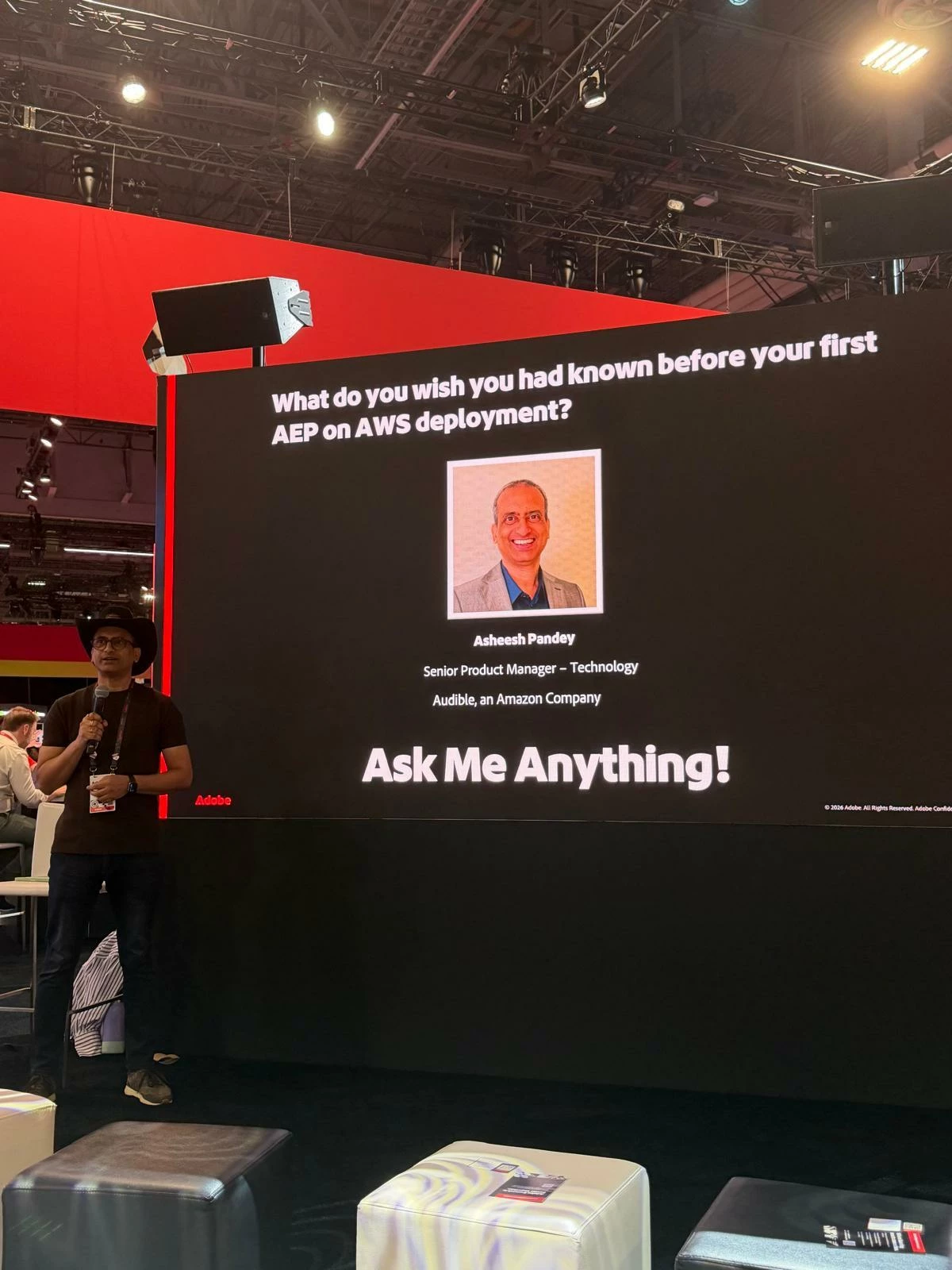
I had the pleasure of speaking at an Experience League Community AMA at Adobe Summit this year, and I wanted to bring the conversation here for those who couldn’t make it. This is the kind of thing I genuinely wish someone had told me before we started.
The Context
When we set out to implement Adobe Experience Platform (AEP), the working assumption was that it would behave like any other cloud deployment. It didn’t. AEP’s defaults around networking, identity models, and tooling integration had been built against a specific cloud environment. That wasn’t documented anywhere, it was something you discovered by running into it. In our case, we discovered it during an architecture review, well into the project, not in a test environment.
On top of that, Real-Time CDP and Customer Journey Analytics had to go live at the same time. That meant every foundational decision from schema design, identity resolution to data integration had to be right for two production surfaces simultaneously, while our internal teams, platform teams, and the platform itself were all operating under different assumptions. Nobody was wrong. But misaligned incentives and undocumented assumptions compound faster than you expect.
What Actually Worked
Data contracts before the first pipeline. Before we ran a single pipeline, we had a formal, documented agreement between every source system and the platform, what data arrives, at what frequency, in what schema, on what schedule, and who owns the problem when something breaks. Not a Slack message. A named document with accountable owners. This single artifact prevented more escalations than anything else we did.
Stakeholder alignment before the first architecture decision. For every use case, we defined “done” before engineering started. Marketing, engineering, legal, and analytics in the same room, agreeing on what a complete customer profile actually means for each of them. What counts as a successful journey? When is the data actionable? That meeting sounds obvious. Almost nobody has it before they need to. By the time you need it, it is expensive.
Governance designed in, not bolted on. Access control, consent architecture, and data classification were part of the schema from day one. Retrofitting governance into a live production platform is one of the most expensive and disruptive things a team can do. The pain is not proportional to the size of the gap — it compounds with every downstream dependency built on top of ungoverned data.
Three Things I’d Tell My Past Self
- Data contracts are not a formality. They are your immune system. Schema decisions made under pressure after go-live cost significantly more in time, engineering, and downstream quality than the same decisions made at the design stage.
- AEP onboarding is not a technology problem. It is an alignment problem. The teams that move fastest are the ones who get marketing, engineering, legal, analytics, and data security teams aligned before a single architecture decision is made.
- Real-Time CDP and CJA are only as trustworthy as the data quality layer underneath them. Build that layer first, and the rest follows.
For those of you navigating a complex multi-workload AEP implementation what’s been your biggest unexpected challenge? I’d love to compare notes.
*All opinions expressed are my own and not affiliated to current or past employers.
↓ Full session transcript in my first reply below. Full Q&A in the second.