Fallout Eventual Path and Next Hit Difference and Visits Issue | Community
Skip to main content
Level 1
April 16, 2026
Question

Fallout Eventual Path and Next Hit Difference and Visits Issue

  • April 16, 2026
  • 1 reply
  • 15 views

I have been having a hard time trying to understand what the difference between Eventual Path and Next hit on the Fallout Report means and as well why the Visits on the Fallout VS the total Visits remains different.

The fallout report has 34799 Visits for a Page A and when they move to Page B they have 15.5k visits.
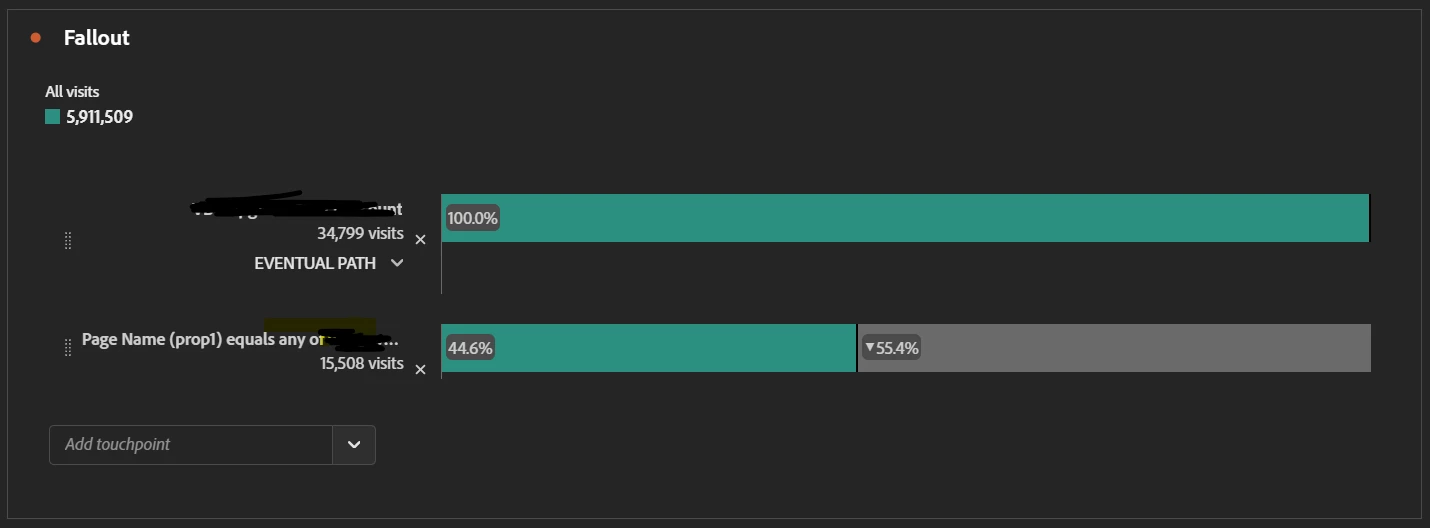
 

However, when I look at the Visits of the Page A individually they stand at 39405. Also, the Page B visits are at 12K which eventually has to be 15.5k. The way page B KPI Card is made that row has Previous Page Name as A and Column has Page B as the name.
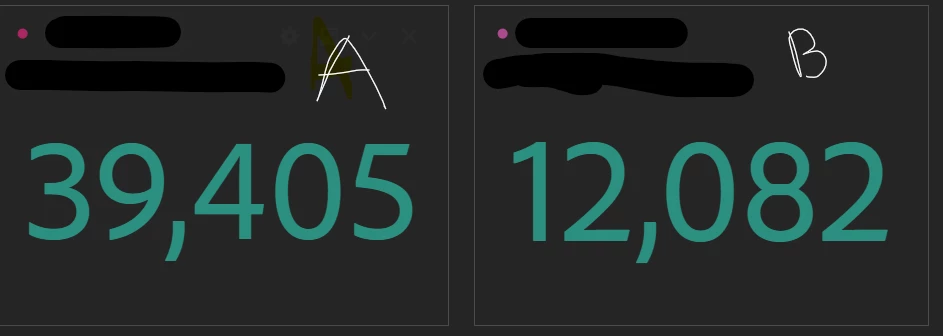


Can someone help me understand the difference why this is occuring?

1 reply

MandyGeorge
Community Advisor and Adobe Champion
April 16, 2026

In the fallout, next hit means that the next row has to occur in the very next hit after the previous row. For example, if you have Page A > next bit > Page B, that means that after Page A fires, the very next hit needs to contain Page B. If you have Page A > some other hit > Page B, it won’t include it. 

Eventual path just means that the next row has to happen sometime after the previous row, but for the same visit/visitor, depending on what level you have your fallout set to. If you have set to visit, it means that after seeing Page A, sometime in the rest of that visit, they need to see Page B. 


The first step of your fallout should match the same dimension in the table with a visits metric. What metric are you using against page A in your table that’s returning 39,405? Do you have any segments applied to either the fallout or the table?


As for the differences in Page B, you mention the summary number is using a segment with “previous page name”. If you have a hit level where page = Page B and previous page = Page A, that would be using a similar type of logic to “next hit” where it’s insisting that Page B is the next page seen after Page A. If you want to replicate the logic more accurately, I would do a visit level segment like this:

visit
    page = Page A
  THEN
    page = Page B

That would give you a closer logic to what your fallout is doing.

Jennifer_Dungan
Community Advisor and Adobe Champion
April 16, 2026

Just a quick note… 


visit
    page = Page A
  THEN
    page = Page B


the THEN here would be like eventual path… not direct…. this could represent A > B, or A > C > B, or A > C > D > ,,,,   > B

To limit to the next page, you would need to add a “within” clause of 1 page view


But yes, as Mandy said, “NEXT HIT” is specifically the two items in a row, whereas “EVENTUAL HIT” means that within the visit, the user has to hit the first condition, and then sometime later in the visit hit the second condition… they don’t have to be next to one another…


Some simple examples:


1. I want to look at a purchase flow where a use clicks on a “Purchase Now” button on a product and immediately makes the order

Product Page > Purchase Now > Checkout Modal > Order  ---  included

Product Page > Purchase Now > Checkout Modal > Back out to the Site > Searches/Product Pages, Add to Carts/etc > Cart > Order    --- NOT included


We don’t want to check for “eventually making an order”… we want the specific “direct from the Purchase Now”


2. I want to look at a newsletter subscription following a purchase, any time in the visit

Page A > Page B > Cart > Order > Page C > Page D > Newsletter Signup  --- Included

Page A > Page B > Cart > Order > Newsletter Signup from the Success Page > Page C > Page D >   --- Included

Page A > Page B > Newsletter Signup > Page C > Page D > Cart > Order  -- Not Included (since the order is wrong)


Basically, in this scenario, there may be multiple places to subscribe to the newsletter, an offer on the Success (after making an order), or on the traditional sign up page… the user may make several page views between the actions, but that doesn’t matter… they eventually signed up for a newsletters after making a purchase

MandyGeorge
Community Advisor and Adobe Champion
April 16, 2026

I did the example with eventual path since that is what was in the original screenshot. 

Also, to add on, adding a clause of “within 1 page view” wouldn’t give you exactly what “next hit” does in the fallout. Because if you have non-page view hits happening in between, that could mean that it would be included in the segment but not in the fallout. If you want the segment logic to be the same as the fallout, you would need “within 1 hit.”