AEP XDM Schema Object and Adobe Analytics Data Object | Community
Skip to main content
Level 2
June 11, 2026
Solved

AEP XDM Schema Object and Adobe Analytics Data Object

  • June 11, 2026
  • 3 replies
  • 72 views

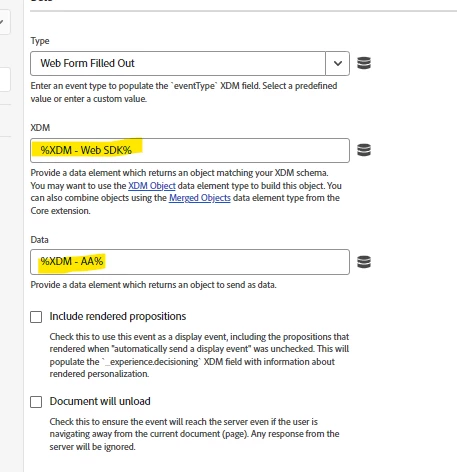
I have done a Adobe Analytics tracking setup via DC Launch using the XDM web SDK schema. I have mapped the eVar, props and Events and the setup seems to working fine.  I am also using a Data object specified for the “Adobe Analytics” which sends data directly to Analytics. I am concerned that if this will cause any Data duplicacy in Analytics. Since the AEP datastream we are using for XDM Schema is sending to Adobe Analytics service and the Data object also does. However, the official Documentation seems to be indicating this setup (Although I cant find right now where I read that).


I also verified this for some Adobe sites and they also use both the data objects simultaneously so I am not sure if this affects anything or Analytics filters this on its end. 


Best answer by Gokul_Agiwal

Hi ​@Kshg7030  There are ways to set Analytics variables in a Web SDK implementation:

  1. Automatic mapping of XDM fields to Analytics variables (automatic).
  2. Set fields in the data object (recommended). 

Here is the reference link where the setup is mentioned  ) I think this is the link you were referring to) -Set Variable in the data object and XDM object

Adobe confirms that both XDM and the data object can be sent together in a single sendEvent call.

  • The system first maps values coming from XDM
  • Then applies the data object mapping
  • If the same variable exists in both, the data object value overwrites the XDM value rather than creating a second hit

This is clearly documented here: Data object field mapping to Adobe Analytics

Adobe explicitly mentions that values are not combined across both sources (for example, events), which reinforces that this is still processed as one hit, not two.

The only side effect is field overwrite if both set the same variable

Duplication happens only when multiple requests are sent, not because both objects exist


I also came across a nice article which articulate nicely on-  The best way to collect data in Adobe Analytics and avoid data duplication which clear your doubts. 

https://medium.com/@rajd33p/web-sdk-for-adobe-analytics-the-best-possible-way-to-collect-data-6a54a965fe54
 

Tagging ​@Jennifer_Dungan  ​@bjoern__koth  ​@yuhuisg ​@MandyGeorge who can share more insights. 
 

Hope this helps. 

Thank you.

3 replies

EurosIMS
Level 4
June 12, 2026

Hi ​@Kshg7030, what’s the reason for the 2 objects, if the Web SDK object is populating AA correctly? As I understand it, the use case for the data object for AA was for migrating legacy setups but not having that data pass through AEP. If you are collecting it already via AEP, I believe the data object setup is redundant/unnecessary? 

To your question, my feeling is that both setups will take the same identifiers (eg ECID) so unique user counts should be stable, but session metrics may be duplicated (2 form submissions, 2 searches, etc.).

Kshg7030Author
Level 2
June 15, 2026

The reason we are using this combo of a setup is because we don't have a complete working AEP ecosystem but only web SDK right now. So, to migrate to web SDK & XDM based schema, we are using an AEP based setup to be future ready and to transit data to AA we are using the “data” object. Based on the article - https://medium.com/@rajd33p/web-sdk-for-adobe-analytics-the-best-possible-way-to-collect-data-6a54a965fe54  we implemented a similar setup as well.

Gokul_Agiwal
Community Advisor
Gokul_AgiwalCommunity AdvisorAccepted solution
Community Advisor
June 12, 2026

Hi ​@Kshg7030  There are ways to set Analytics variables in a Web SDK implementation:

  1. Automatic mapping of XDM fields to Analytics variables (automatic).
  2. Set fields in the data object (recommended). 

Here is the reference link where the setup is mentioned  ) I think this is the link you were referring to) -Set Variable in the data object and XDM object

Adobe confirms that both XDM and the data object can be sent together in a single sendEvent call.

  • The system first maps values coming from XDM
  • Then applies the data object mapping
  • If the same variable exists in both, the data object value overwrites the XDM value rather than creating a second hit

This is clearly documented here: Data object field mapping to Adobe Analytics

Adobe explicitly mentions that values are not combined across both sources (for example, events), which reinforces that this is still processed as one hit, not two.

The only side effect is field overwrite if both set the same variable

Duplication happens only when multiple requests are sent, not because both objects exist


I also came across a nice article which articulate nicely on-  The best way to collect data in Adobe Analytics and avoid data duplication which clear your doubts. 

https://medium.com/@rajd33p/web-sdk-for-adobe-analytics-the-best-possible-way-to-collect-data-6a54a965fe54
 

Tagging ​@Jennifer_Dungan  ​@bjoern__koth  ​@yuhuisg ​@MandyGeorge who can share more insights. 
 

Hope this helps. 

Thank you.

Thanks, Gokul
yuhuisg
Community Advisor
Community Advisor
June 13, 2026

Use the AEP Debugger browser extension to verify the data that has been collected by Analytics.

  1. Open the AEP Debugger extension. (Install it if you haven’t already.)
  2. In the left menu, click on Logs.
  3. In the Logs panel, click Edge at the top.
  4. Sign in with your Adobe login. You should be back at the Logs > Edge panel.
  5. Click “Connect”.
  6. Go back to the browser window with your web page.
  7. Reload your web page.
  8. Go back to AEP Debugger. Ensure that you’re still at the Logs > Edge panel. It should fill up with log records.
  9. Look for the log record that says “mappedQueryParam” or something like that. Expand the record.

The log should show the data that has been received by Analytics finally. Use this to verify your implementation.

But as ​@EurosIMS said, having 2 objects causes unnecessary confusion. If you’re able to, update your Launch rules to use either the XDM object or the data object. My personal preference is to use the XDM object first, then supplement it with the data object when absolutely necessary for any variables that can’t be set via the XDM object.